Ontario’s Reagan Ad Sparks Canada–U.S. Trade Turmoil
A government-funded advertisement from the Province of Ontario invoking former U.S. President Ronald Reagan’s warnings about tariffs has triggered political, diplomatic, and media scrutiny across Canada and the United States. The controversy has elicited criticism from the Ronald Reagan Presidential Foundation, prompted public responses from U.S. President Donald Trump, and raised concerns among trade experts about the stability of Canada–U.S. commerce.
Background: A Trade Climate Under Strain
Canada and the United States remain deeply integrated trading partners, particularly in automotive manufacturing, steel, agriculture, and energy. Ongoing U.S. tariff policies, focused on Canadian metals and select goods, have renewed cross-border tensions. Canadian industries and political figures have warned that further escalation may result in economic harm on both sides of the border.
In this environment, Ontario’s government launched a targeted media campaign in the United States. The messaging appealed to American audiences by citing historical examples of political rhetoric cautioning against protectionism.
The Ontario Anti-Tariff Advertisement
The advertisement features archival footage of Ronald Reagan discussing the dangers of tariffs and retaliation. Graphics within the ad emphasize that trade wars can increase consumer prices, disrupt supply chains, and lead to job losses.
The ad was funded using provincial government resources from communications budgets. It aired on American cable networks, streamed on social media platforms, and circulated through digital placements in select border-state markets.
When questioned, Ontario officials stated the intent was to “remind Americans of the shared economic risks” and to “protect Ontario workers reliant on export markets.”
Doug Ford’s Position
Ontario Premier Doug Ford defended the advertisement, asserting that tariffs on Canadian goods harm:
- U.S. consumers
- North American supply chains
- Cross-border economic stability
Ford stated that Reagan’s remarks serve as “historical guidance” rather than political interference. He emphasized the importance of maintaining open trade channels with key U.S. partners and highlighted Ontario’s export relationship with several American states.
In multiple press briefings, Ford declined to comment on criticism surrounding the use of Reagan’s image without direct authorization.
Reaction From the Ronald Reagan Presidential Foundation
The Ronald Reagan Presidential Foundation issued a public statement expressing concern over the ad’s context. The foundation argued the advertisement:
- Selectively framed Reagan’s message
- Did not request formal clearance
- Risked politicizing Reagan’s legacy in foreign debates
Foundation representatives noted that Reagan did support limited trade interventions during his presidency in response to unfair competition, a nuance they claim the advertisement omitted.
Legal experts have since debated whether the footage used constitutes public domain material or requires licensing due to presidential archive controls. No formal legal action has been announced.
Response From President Donald Trump
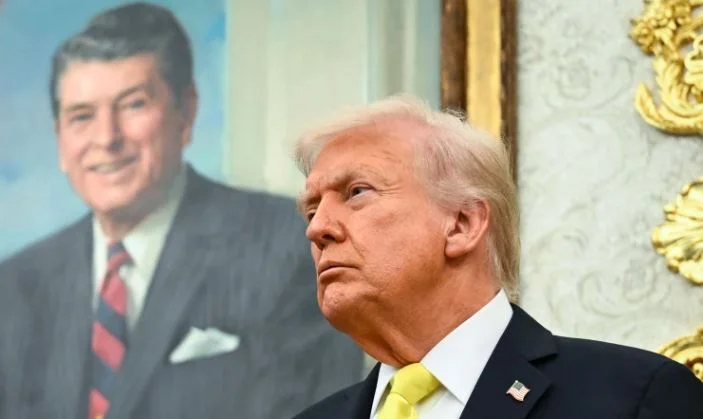
President Donald Trump reacted publicly through statements released on Truth Social, labeling the ad “misleading” and accusing Canada of attempting to influence U.S. political discourse. He disputed the notion that tariffs damage consumers, arguing they incentivize domestic manufacturing and reduce foreign dependency.
In a separate post, Trump stated that the United States was “terminating trade negotiations with Canada,” though neither government immediately confirmed the operational scope of this declaration.
White House officials offered no further clarification, and U.S. trade representatives remained unavailable for comment.
Federal Canadian Response
Canadian federal officials responded cautiously. Cabinet members emphasized Canada’s commitment to constructive diplomacy while acknowledging provincial autonomy in communications strategy. They reiterated the importance of stable trade flows and expressed concern that retaliatory measures could impact several key industries.
Economic advisors noted that diversification into European and Asian markets remains an ongoing federal goal, but warned that such transitions are gradual and cannot replace U.S. market access quickly.
Industry Reactions
Canadian business associations reacted with mixed sentiment:
- Automotive manufacturers warned of increased production costs if tariffs expand.
- Agricultural exporters fear spoilage risks and logistical delays.
- Aluminum and steel producers expressed concern about long-term export viability.
U.S. business groups in border states echoed similar worries, citing integrated supply chains as a core vulnerability in tariff policy.
Media Coverage
Canadian media outlets, including CBC News and CTV News, framed the story around diplomatic strain and economic risk. Coverage highlighted expert commentary asserting that tariff disputes historically harm both parties.
In the United States, certain outlets described the Ontario ad as foreign messaging aimed at influencing American public opinion, drawing comparisons to past election-year foreign communications controversies.
Talk radio hosts in industrial regions expressed concern about job stability and factory output, suggesting any tariff escalation would likely trigger layoffs.
Historical Context: Reagan on Tariffs
Political historians note that Ronald Reagan frequently warned against broad protectionist measures, arguing that:
- retaliatory tariffs diminish global market access,
- consumers ultimately pay higher prices, and
- trade wars reduce economic growth.
However, Reagan occasionally supported targeted restrictions to counteract what his administration labeled unfair trade practices from overseas competitors.
Analysts argue that this nuance is essential to accurately represent his position.
Legal and Ethical Considerations
The use of historical political figures in modern, international policy messaging raises several questions:
- Consent: Presidential scholarly foundations commonly require context review.
- Copyright: Archive footage may fall under varying permissions depending on format.
- Diplomacy: Foreign political messaging directed at U.S. audiences is infrequent and closely scrutinized.
International relations specialists warned that similar campaigns could set new precedents.
Potential Economic Impact
If tariff disputes worsen, economists predict several possible outcomes:
- increased consumer costs in both countries due to import duties,
- reduced output in Canadian manufacturing facilities,
- delayed cross-border shipments as companies reassess logistics,
- increased uncertainty for investors in North American markets.
The automotive sector is seen as particularly vulnerable due to the high volume of parts crossing the border multiple times during production.
Trade Negotiations: Uncertain Future
Trade representatives from both countries have historically resolved disputes through:
- bilateral talks,
- World Trade Organization arbitration,
- regional trade frameworks such as CUSMA/USMCA.
Analysts warn that if negotiations remain suspended, Canada may be forced to explore tariff countermeasures, though officials prefer to avoid escalation.
Political Analysis
Political scientists noted that the advertisement may reflect:
- provincial pressure to demonstrate action,
- concern over voter perception in manufacturing regions,
- an attempt to leverage historical American voices to persuade U.S. audiences.
Critics argue that foreign messaging risks appearing intrusive, regardless of intent.
Conclusion
The Ontario government’s Reagan-based anti-tariff advertisement has unexpectedly expanded into a complex cross-border dispute involving historical interpretation, intellectual property, political symbolism, and economic policy. While the ad sought to warn against the dangers of tariff escalation, it has instead contributed to heightened diplomatic tension.
Officials in both countries now face pressure to clarify negotiation status, reassure industries, and prevent further damage to the Canada–U.S. trade relationship. As of this writing, trade talks remain formally uncertain, though neither government has set a timeline for renewed discussions.