Catherine Connolly: What She Stands For and Her Policies
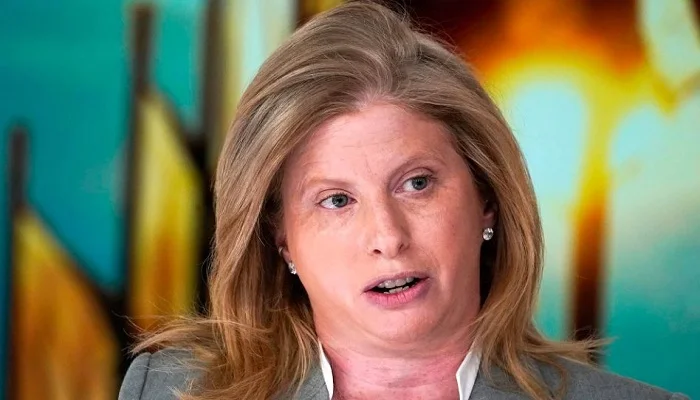
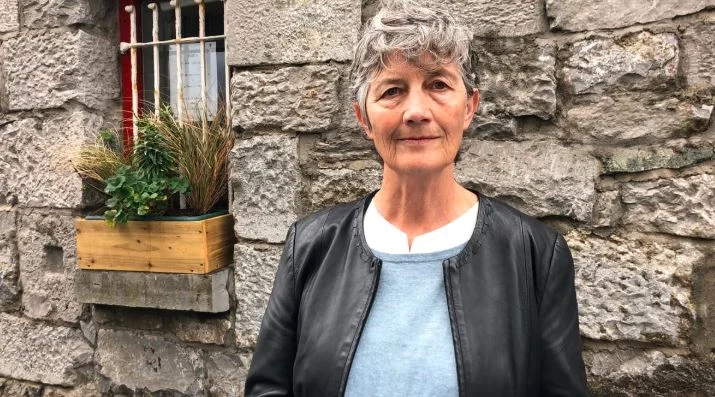
Catherine Connolly is an Irish independent politician from Galway who rose from local government to the national stage and — in 2025 — won the Irish presidential election in a landslide. Catherine Connolly presents herself as a left-wing, socialist, and pacifist voice who champions social justice, Irish neutrality, and a strong public role in housing and health services.
Political career from Galway to Áras an Uachtaráin
Catherine Martina Ann Connolly was born in Galway in 1957 and started her political life in the Labour Party. She was elected to Galway City Council in 1999 and served as Mayor of Galway in 2004–2005. In 2006 she left Labour and subsequently contested national elections as an independent. After two unsuccessful general election bids she was elected as a Teachta Dála (TD) for Galway West in 2016 and re-elected thereafter. She served as Leas-Ceann Comhairle (Deputy Speaker) of Dáil Éireann from 2020 until 2024. In 2025 she ran for president as an independent with the backing of several left and centre-left parties and won decisively.
Key milestones:
Galway City Councillor (1999–2016); Mayor of Galway (2004–2005).
Elected TD for Galway West (first elected 2016).
Leas-Cheann Comhairle (Deputy Speaker) of the Dáil (2020–2024).
Elected President of Ireland (2025), winning roughly 63% of first-preference votes in a campaign that energized younger and left-leaning voters.
Catherine Connolly Family and personal background
Connolly grew up in Shantalla, Galway, one of 14 children — a fact she frequently cites as formative. She is married to Brian, and they have two adult sons; she has lived in the historic Claddagh area of Galway since 1988. Before full-time politics she worked as a clinical psychologist and later trained as a barrister. She is an Irish speaker (Gaeilgeoir) and often highlights her local roots and community background in public speeches.
What Catherine Connolly stands for — values and rhetoric
Connolly defines herself politically on the left: socialist in outlook, committed to egalitarian public policy, and a pacifist in foreign affairs. Her platform and public statements emphasize:
Social justice and an active state: a robust role for government in providing housing, health, public transport and other services. She has campaigned for stronger social protections and to prioritise resources toward people experiencing hardship.
Irish neutrality and anti-militarism: Connolly is a vocal defender of Irish neutrality, critical of NATO expansion and what she calls the “military-industrial complex.” She has warned against what she sees as increasing militarisation in Europe.
Human rights and international solidarity: an outspoken advocate for Palestinian human rights, critical of Israeli government policy, and a consistent voice calling for humanitarian responses in international crises.
Civil liberties and social reform: she backed same-sex marriage and the legalisation of abortion, and frames many domestic issues in terms of dignity, equality and civil rights.
Journalists describe her as direct and outspoken, highlighting her focus on empowering ordinary people and challenging authority.
Catherine Connolly Policy positions: the practical agenda
While the Irish presidency is largely ceremonial, Connolly campaigned on issues she said she would spotlight or influence through moral leadership, public engagement, and the platform the presidency provides. Her notable policy positions and priorities include:
Housing and public services
Connolly argues for an “active state” role in delivering public services: increased investment and policies aimed at reducing homelessness, improving affordable housing supply, and strengthening the health system. She has the backing of parties and groups who prioritise social housing and public provision.
Climate and environment
Climate justice features in her campaign rhetoric: she supports policies that combine emissions reduction with protections for workers and communities, and frames environmental action as inseparable from social policy.
Foreign policy and neutrality
Connolly is a staunch defender of Irish neutrality and sceptical of deeper military alignment with NATO or EU defence initiatives. She condemns what she sees as warmongering by powerful states and places a strong emphasis on diplomacy, human rights and humanitarian law. At the same time, she has condemned Russia’s invasion of Ukraine while criticising NATO’s posture as “warmongering” in some of her remarks — a stance that has drawn both support and criticism.
Human rights and international solidarity
A consistent theme in Connolly’s career is campaigning on human-rights grounds — notably for Palestinian rights — and using her platform to call for humanitarian action and accountability. Her foreign policy positions have been described as “often anti-Western” by some commentators, reflecting her willingness to criticise U.S., U.K. and other western policies.
Political significance and public perception
Many observers interpreted Connolly’s 2025 presidential victory as a symbol of a broader shift in Irish politics with some voters using it to protest against the established centre-right parties, while others embraced it as an affirmation of left-of-centre priorities. Journalists note that her campaign not only mobilised younger voters but also benefitted from a broad coalition of left and centre-left endorsements. As a result, her presidency is expected to be one of moral and rhetorical influence rather than direct policy-making power. Nevertheless, that influence has the potential to shape national debate, particularly on issues such as social justice, neutrality, and Ireland’s role on the international stage.
Conclusion
Catherine Connolly grounds her political identity in local Galway politics, sustained activism, and a distinctly left-wing worldview that unites domestic social policy with international human-rights issues. In her new role as President, though it is largely symbolic, she aims to use the position as a platform to spotlight inequality, while at the same time defending neutrality and promoting the public good.